

Why groundwork should never be an afterthought
Less standing water to deal with
Planned falls and drainage measures help the ground shed rain sensibly.
Better support for new surfaces
Prepared layers underneath help patios and paving last more reliably.
Problems tackled before finishing
We address site conditions early instead of burying them under the next build.
Sort the water and the groundwork before the surface
If rain sits where it shouldn't, or the ground beneath a new surface has never been prepared properly, the rest of the job is already on the back foot. Garden drainage and groundworks deal with the hidden part of landscaping that supports driveways, patios, paving and other permanent features. In Carnforth, we assess the existing levels, soil, water movement and the intended finished surface before work starts, because standing water rarely fixes itself out of politeness.
The groundwork may involve excavation, forming levels, preparing structural layers and planning how water will be collected or dispersed across the site. Getting those decisions right early helps protect whatever sits above.
The right solution depends on the site
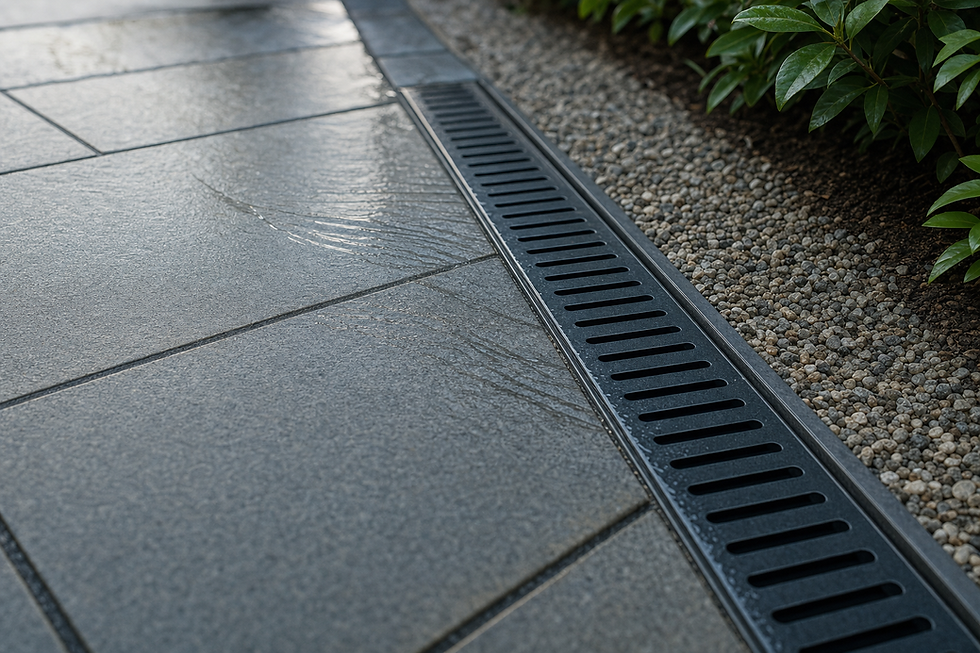
Different gardens call for different approaches. Depending on the conditions, that might mean drainage channels, land drains, soakaway systems, free-draining sub-bases or a combination of methods working together. The key is choosing what suits the site rather than reaching for a stock answer. In Carnforth, JD Landscapes coordinates drainage and groundwork before new paving or structures are installed so the finished landscaping is supported by the right falls and preparation instead of asking the top layer to hide deeper problems.
Frequently asked questions
What causes standing water in a garden?
Standing water can come from poor falls, compacted or slow-draining ground, low points in the garden or hard surfaces that direct water to the wrong place. The cause is not always obvious from the wet patch alone, so we look at the levels, soil and surrounding surfaces before suggesting a fix.
Can drainage be added before a new patio or driveway?
Yes, and that is often the sensible time to deal with it. If a patio, driveway or paved area is being built, planning the drainage first means the new surface can be set to the right falls and supported by the right ground preparation instead of trying to retrofit a solution later.
How do you decide which drainage method to use?
We assess how the site behaves now, including the soil, levels, water route and any possible outlets or collection points. From there, we can decide whether channels, land drains, soakaways, free-draining sub-bases or a combination make sense for the ground and the landscaping being installed.