
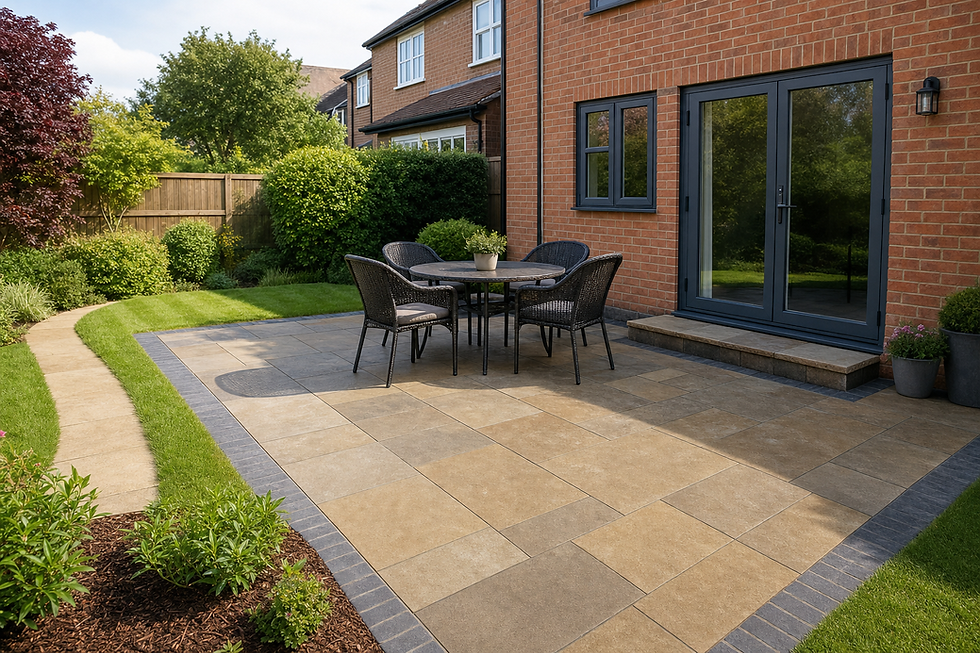
What you gain from a well-set patio
Space that fits real use
We size and place the patio around meals, seating and movement.
A surface that stays steady
Good preparation underneath helps prevent rocking slabs and weak edges.
Cleaner links through the garden
Paths, steps and borders can tie the patio into the rest of the layout.
Make the space outside the door more usable
A patio works best when it suits how you actually spend time outside. You might want room for a table that people can walk around, a quiet seating spot that catches the better part of the day, or a surface that stops everyone trailing mud back in. For homes in Carnforth, JD Landscapes plans the size, shape and position around dining, sitting, movement and the way the patio connects with the house and garden.
The build itself needs more than neat slab lines. We set out the area, excavate, prepare the sub-base, lay the bedding, place and cut the paving, then finish the joints carefully. Done properly, the surface feels secure underfoot and sheds rainwater instead of hanging onto it.

Planned details make the whole layout flow
Paving format, colour, texture and joint finish all change how a patio looks and how much upkeep it needs, but the edges matter too. Steps, borders and links to lawns or paths help the whole garden feel joined up rather than a series of add-ons. In Carnforth, we pay close attention to levels and falls so the finished area is comfortable to use and practical in wet weather. If the patio needs to connect with another surface or solve an awkward threshold, we plan that before a single slab goes down.
Frequently asked questions
How big should my patio be?
We start with how you want to use it. A dining area needs room for chairs to pull out and people to move around, while a smaller seating space can be more compact. We also check door positions, routes through the garden and how the patio will meet lawns, paths or steps.
How do you stop water sitting on a patio?
The finished surface needs suitable falls so rainwater runs away rather than pooling. That starts with the groundwork, not just the top layer. We build stable foundations and accurate levels, which helps protect the paving and makes the patio more pleasant to use after wet weather.
Can you connect a patio to paths or steps?
Yes. In many gardens, those connections are what make the new space feel practical. We can plan edges, steps and links to other paved areas or lawn routes so the patio sits properly within the layout instead of feeling dropped into the middle of it.